
Stenodisc
Stenodisc lets you approve what your AI agents do and keeps one record of their decisions, whichever assistant made them.
In development
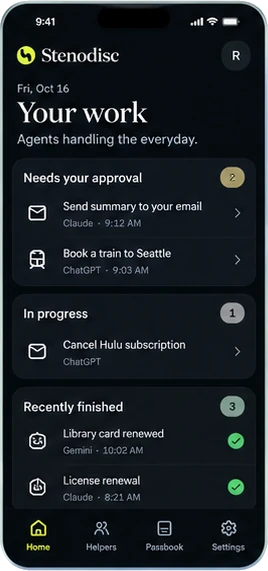
How an approval works
Claude wants to email you a summary of this week's activity.
Claude asks first
The request shows the address, the subject, the send time, and what Claude will do. You decline it or approve it.
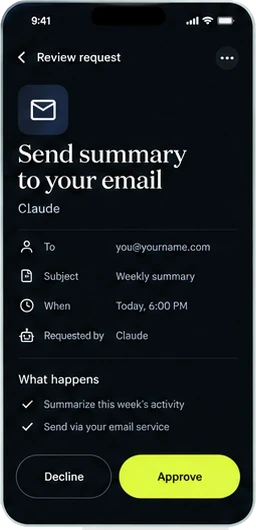
Review request You approve, and Claude goes ahead
Stenodisc tracks the request from there. The email service has accepted it, and delivery stays unconfirmed until the service reports it.
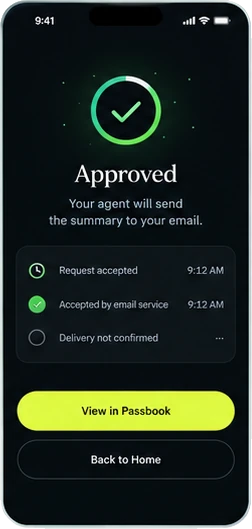
Approved The Passbook keeps every step
The entry records when Claude asked, when you authorized it, and when the email service accepted it, along with the address, subject, and send time.
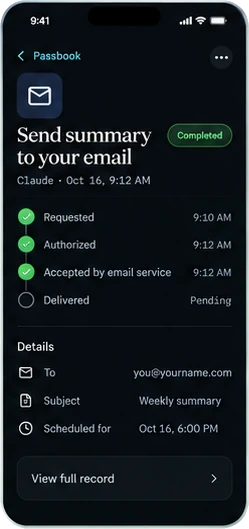
Passbook detail
What you can check and change
One record across Claude, ChatGPT, and Gemini
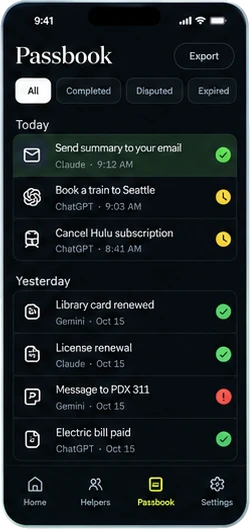
The Passbook lists what each agent did for you, newest first, with its status. You can filter it or export it. Over time the receipts add up to each assistant's track record.
Passbook Dispute an outcome nobody confirmed
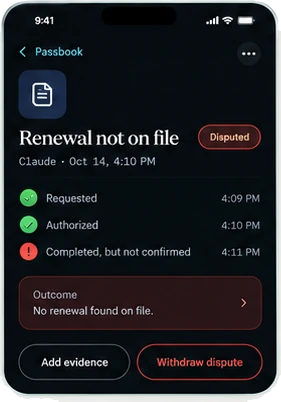
Stenodisc marks a task done when the service's reply supports it. Claude reported a license renewal as completed, but no renewal was found on file, so the entry is Disputed. You can add evidence or withdraw the dispute, as you would with a card charge.
Disputed Set each agent's limits
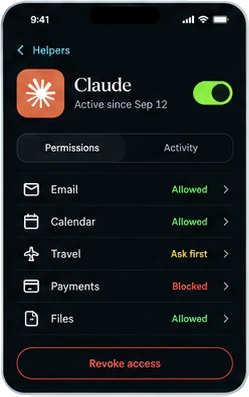
Each kind of action runs on its own, asks you first, or stays blocked. Claude handles email, calendar, and files on its own, asks before travel, and is blocked from payments. You can revoke its access from the same screen.
Helper permissions
Ask for early access
Write to us with the assistants you use and the first errand you'd hand them.
Stenodisc Manager is the side for organizations that receive agents' requests, from reservations to 311 reports. Any organization can opt in by connecting over the Model Context Protocol (MCP) or another agent connection.